
2025 FT Challenge Results Page
Highlight of the 2025 International FT Challenge was the excellent high band propagation, especially on 10 meters which opened nicely on DX paths. The solar flux was right at 200, the A index was 16 and the K index was 2. Later, the K dropped to zero and conditions were even better toward the end of the contest. Generally quiet geomagnetic conditions were observed worldwide and because of these conditions, FT4 worked well on the higher bands.
There wasn’t much activity on the suggested frequencies, with nearly all the action on standard frequencies. Naturally there will be many more stations to work on the standard frequencies, so it’s OK to be there.
By comparison, the 2024 contest had many more entries than 2025. There were only 347 logs submitted in 2025 compared to 554 in 2024. In all, there were 10,325 QSOs claimed compared to 11,869 the previous year. This type of contest is hard to judge since the majority of participants don’t even know they are participating.
This year, we were able to report new categories for Single Operator QRP and Classic that were created last year but we totally fumbled on posting those results. Classic is an overlay category and defined as using only one radio (SO1R – single operator, one radio). This puts the total categories at five – Single Operator, Single Operator QRP, Multi-operator, Single Operator Classic and Single Operator Classic QRP. Classic entries are grouped with Single Operator in the results but are also listed in their own categories. This year there was only one QRP log submitted.
Single Operator Low Power
Dennis, W1UE, was the winner in the Single Operator category with 1,342 QSOs and 233 multipliers for a score of 668,244 pts. In second place, for the 2nd year in a row, was Steven, N8HRZ, with 1,093 QSOs and 238 multipliers. Steven’s score was 582,624 points. Dennis reported that most of his contacts were FT4, whereas Steven relied exclusively on FT8, with only 6% of his contacts being FT4.
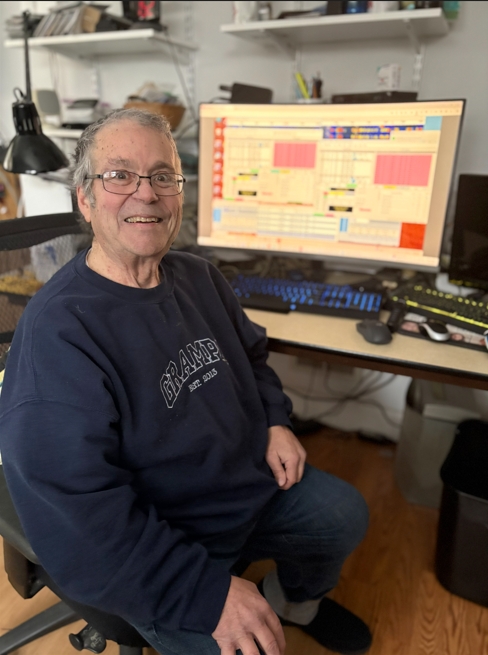 Dennis, W1UE, 2026 Single Operator winner
Dennis is one of the premier digital operators in the world. His digital experience includes operating as CW5W in the 2015 10-Meter RTTY Contest, where he holds the South American record. He was also one of the remote digital operators for the N5J Jarvis Island DXpedition in 2024, where he made nearly 10,000 FT8 contacts. His digital contesting resume includes four wins in three different categories in the ARRL RTTY Roundup as well as wins in the WW Digi Contest and ARRL International Digital Contest (IDC).
He is also part of the group that created the Thursday night FT4 NA Sprints. He was chairman of the ARRL Contest Advisory Committee (CAC) and head of the group that designed the ARRL IDC.
This is what Dennis had to say about the contest “The rule change in 2024 definitely improved this contest; it created a bottomless pit of stations already using the contest exchange to work. Activity was strong up until the end, and was strong most of the night. FT4 was surprisingly robust; 55% my QSOs were on FT4. A fun contest- and the only FT contest in wintertime to spur ops to move to the low bands. Activity begets activity.”
Dave, KA6BIM, operating as K6SEA, was 3rd with 407,415 points on 1,120 QSOs and 157 multipliers. Finishing 4th was Dick, K9OM and Nick, NA3M, rounded out the top five.
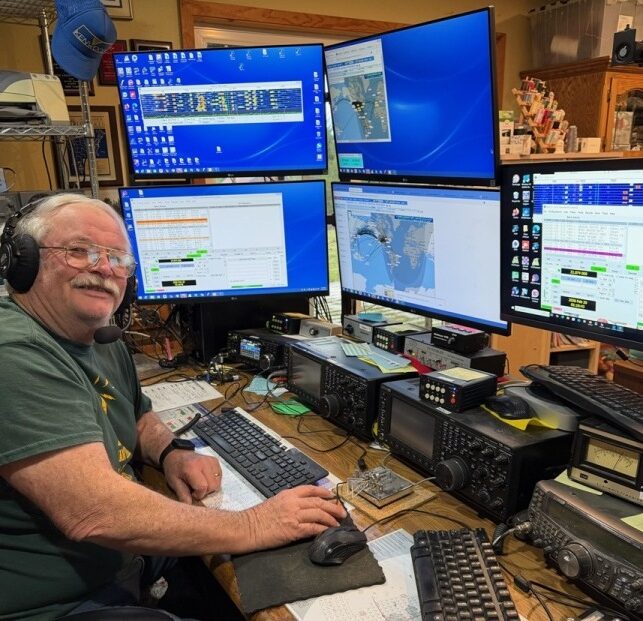 Dave, KA6BIM, operating as K6SEA, 2026 3rd Place, Single Operator
Single Operator Low Power Classic
Dick, K9OM, won the Classic category handily with 811 QSOs, 185 multipliers and 357,975 points and had this to say after the contest “WOW- that was a ton of fun! I really like the new format with the standard FT exchange.”
Second was Anton, ON6NL, with 170,177 points who had this to say “Big fun hunting squares and not DXCCs for a change. Asia and Europe have a big disadvantage as we have only 8 hour daylight out of the 30 hours the contest lasts.” Anton has a good point. Stations outside North and South America do have a disadvantage because of the lack of daylight hours to operate. The history behind this is that when we started the Ten Meter RTTY Contest years ago, we used it as a “warm up” for the ARRL RTTY Contest in January. We used the same 30-hour format. We kept this for the FT Roundup and now the International FT Challenge. However, the ARRL RTTY Roundup is considered a “domestic” North-American contest and the rules tend to favor North American stations. We will take a close look to see if changes will help spur activity and give others more daylight hours to operate since it is our goal to make this an “International” contest.
Barry, N1NQD, was 3rd, followed by Gerry, KA2MGE, in 4th and Ed, N1EK, finished in 5th place.
Single Operator QRP & QRP Classic
There was only one entry in Single Operator QRP (& Classic). Ron, W9RWG, operating from northern Indiana, made 179 QSOs with 44 multipliers for a score of 8,756 points. Ron had this to say “I ran the contest using my Yaesu FT-891 set to 5 watts, logging with N1MM. Antennas included my N9SAB linked dipole, a Flatlanders Mirrors 49:1 half-wave end-fed, and a Flatlanders Mirrors 9:1 random-wire end-fed, all matched with an LDG Z-100A tuner. I powered everything from batteries to stay true to my usual portable operating style, even though I was at my home QTH.”
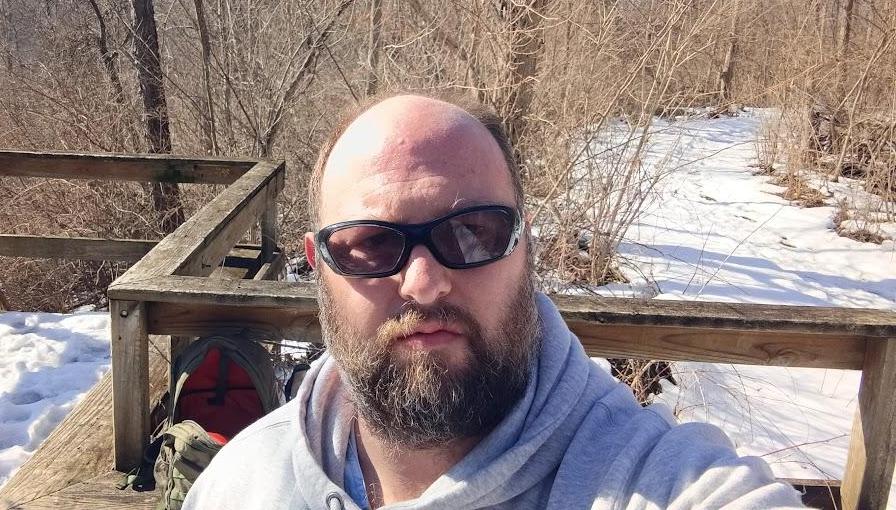 Ron, W9RWG, 2026 QRP winner
Ron, who does a lot of POTA (Parks on the Air) activations, expanded on his operation “Even though I normally operate almost exclusively in the field, I tried to replicate the “POTA mindset” from home — simple, efficient, and battery-powered.
“Conditions on 20m and 40m were solid. I tried 80m, but at my location the noise floor was extremely high. Although the tuner matched the antenna, the radio didn’t like transmitting there — it was glitchy and unstable — so I abandoned 80m early.
“Snow, cold weather, and low solar angles made 10m and 15m more challenging than I expected. Looking back, I probably could have managed my time better, and I think using my 17-ft whip might have improved performance on the higher bands.
“Next year I’d like to be more competitive on 10 meters, likely with an antenna that has real gain over a dipole or end-fed. I’m also considering not entering Classic so I can run SO2R, which would help increase my rate and multiplier count.
“Overall, this was a fun contest and a great winter operating challenge — snow outside, battery power inside, and plenty of FT4/FT8 activity to keep things moving.”
Hopefully Ron’s effort will encourage others to enter QRP and QRP Classic next year.
Multi-Operator
Angus, KJ7KOJ, teamed up with his dad, Robin, W7YED, and moved up from 3rd place last year, to win the Multi-Operator category with 821 QSOs, 163 multipliers and a score of 310,352, operating as KJ7KOJ. This is the 5th year in a row that KJ7KOJ has entered in either the FT Challenge or FT Roundup in the Multi-operator category. Angus and Robin are gaining experience in digital operating. Both took part in the S9Z DXpedition in 2024 and Robin was a remote operator for both the K8R and N5J DXpeditions that same year. Their digital operating experience paid off with their first win.
In 2nd place was GM5G (MM9SQL & GM1TGY) with 1033 QSOs, 111 multipliers and 156,621 points. They moved up from 4th last year. Despite making 200 contacts more than KJ7KOJ, the team was unable to make up the multipliers.
G6RST (G0WEJ M0XUE M0VVX MSDCJ M0YBD M7TQZ G7SQC), the Horndean & District Amateur Radio Club (HDARC), celebrated their club’s 50th anniversary by finishing 3rd with 405 QSOs, 78 multipliers and 54,912 points. DL4A (DO1THM DL4ML DB1SDJ DF7KW DO1ZX DL4RLF) was 4th with 41,951 points and YU5R (YT2AAA & YT3PL) finished 5th with 37,503 points.
Finally, we would like to leave you with some suggestions on improving your FT contesting experience from this year’s single operator winner, Dennis, W1UE.
1. If multiple stations call you, work the strongest first. When operating at N5J, I found one could increase their rate just by working the strongest stations first. It may seem counter intuitive to not necessarily work mults first, but it worked for me.
2. Don’t neglect FT4! It’s twice as fast as FT8 at a small sacrifice in sensitivity.
3. Treat each band as, in reality, 8 bands. Make sure you hit all 8 on a rotating basis. I keep a chart on which band/mode/OE I’m on, to make sure I hit them all. Below is an example of the “8 bands” for 15 meters.
FT4 15m 21140 odd
FT4 15m 21140 even
FT4 15m 21080 odd
FT4 15m 21080 even
FT8 15m 21074 odd
FT8 15m 21074 even
FT8 15m 21090 odd
FT8 15m 21090 even
That wraps it up for 2025. See you in 2026 on December 5 & 6!
73, Don AA5AU & Ed W0YK